Quick Information
RECOMMENDED DURATION
5+ hours
VISITORS PER YEAR
1000000
TICKETS
From $12.22
NUMBER OF ENTRANCES
3
EXPECTED WAIT TIME - STANDARD
30-60 mins (Peak), 0-30 mins (Off Peak)
EXPECTED WAIT TIME - SKIP THE LINE
0-30 mins (Peak), 0-30 mins (Off Peak)
Did you know?
Phillip Island Nature Parks is a Victorian Government-created not-for-profit that manages about 20% of Phillip Island as conservation reserves and visitor attractions.
The Penguin Parade follows sunset rather than a fixed nightly schedule, so arrival times shift through the year and the experience can finish quite late in summer.
Photography and filming are completely banned during the Penguin Parade because lights and screens can affect the penguins’ sensitive eyes and orientation.
Is Phillip Island Nature Parks Worth It?
Salt wind, low light, and the sound of surf do most of the work before a single penguin appears. You sit facing Summerland Beach in near silence, then small blue shapes break from the water and hurry up the sand, followed by more, then more, until the whole coast feels alive.
Phillip Island Nature Parks exists because this shoreline was protected instead of developed. The experience is built around a simple idea: let visitors watch wild animals without disturbing the habitat that keeps them here, whether that means raised koala boardwalks, restored wetlands, or penguin-safe lighting at night.
What stays with you is how intimate the wildlife feels once the main crossing ends. On the walk back, penguins shuffle past at burrow level, calling to mates and chicks in the dark.
Skip it if late nights, cold coastal weather, or waiting on wildlife's own timing sound more frustrating than rewarding.
What can you see across Phillip Island Nature Parks?
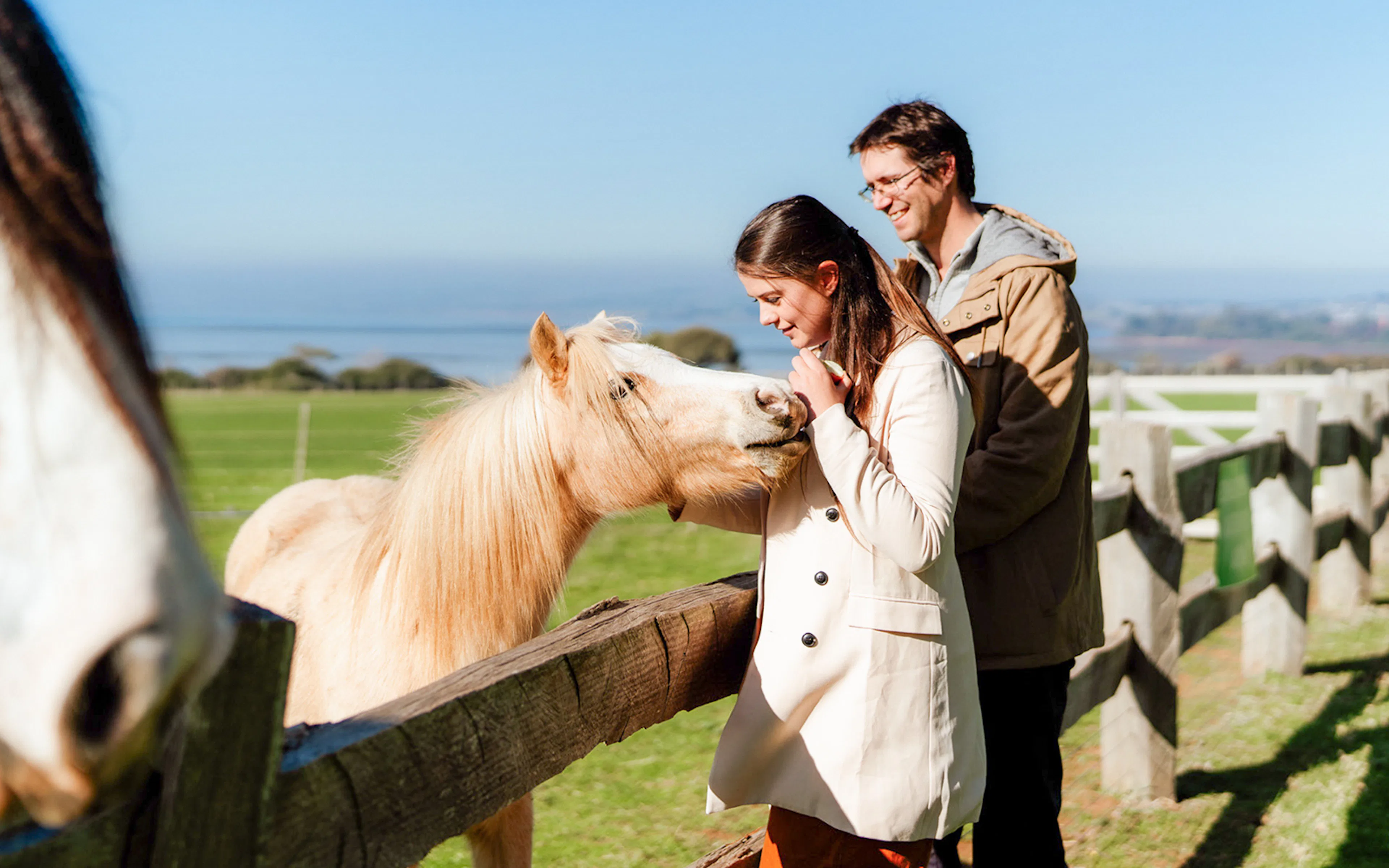
Churchill Island Heritage Farm
Start with the island’s oldest European farming site, where coastal walks, heritage cottages, and working-dog or sheep-shearing demos make the landscape feel lived-in rather than staged. Time your visit around scheduled farm displays or it feels much quieter.
Koala Conservation Reserve
Two elevated boardwalks bring you level with sleepy koalas tucked into eucalyptus forks. It is compact, easy to cover in under an hour, and one of the most reliable wildlife stops on the island.
The Nobbies Boardwalk
A wide, easy boardwalk winds along dramatic clifftops above blowholes and crashing surf. Fur seal colonies are often visible on the rocks below, and the walk connects directly to the viewing platforms looking out toward Seal Rocks.
Penguin Parade viewing areas
General Viewing gives you the big-picture spectacle, while Penguins Plus and Underground Viewing bring you much closer. Premium tiers have limited capacity, especially Underground Viewing, so they are the first to disappear on peak summer dates.
The post-parade boardwalk
Do not treat this as the exit path only. This is where penguins pass closest, waddling toward burrows beneath and beside the raised walkway. Many first-timers rush out too early and miss the most intimate part.
How to explore Phillip Island Nature Parks?
How much time to spend?
If you’re only here for the Penguin Parade, allow 3.5–4.5 hours on site, including arrival before sunset, the wait, the crossing, and the slow boardwalk walk back. For the full parks circuit, give yourself 8–10 hours on the island, or a full 12-hour day from Melbourne.
Best visit order
Start at Churchill Island, then drive to the Koala Conservation Reserve, continue to the Nobbies boardwalk, and end at the Penguin Parade Visitor Centre (Google Maps: ‘Penguin Parade Visitor Centre’). That order works because the daytime parks close earlier, while the penguins only arrive after sunset.
Must-see highlights
Must-see: Penguin Parade, the post-parade boardwalk, koala treetop boardwalks, and the Nobbies coastal walk. Optional: Churchill Island’s heritage farm demos and Antarctic Journey, which add about 60–90 minutes each and make the most sense on a full-day visit.
Worth adding nearby
If you want the simplest bundled day, Phillip Island 3 Parks Pass: Penguin Parade, Koala Conservation Reserve & Churchill Island covers the most logical trio. If you’re staying overnight, a seal cruise adds a genuinely different marine-wildlife angle from the island’s land-based experiences.
Guided or self-paced?
A guided trip is worth it if you’re coming from Melbourne and don’t want a late-night drive, parking stress, or seasonal timing to manage; From Melbourne: Phillip Island Penguin Parade Afternoon Guided Tour is the cleanest parade-focused option. Self-paced is better if you have a car and want Churchill Island, longer boardwalk time, or dinner breaks on your own schedule.
Brief history of Phillip Island Nature Parks
- 1801: Lt James Grant landed on Churchill Island and planted one of Victoria’s earliest European crops.
- 1920s: Tourists began gathering to watch little penguins, even as housing spread across the Summerland nesting area.
- 1985: The Victorian Government committed to buying back 774 Summerland properties to restore penguin habitat.
- 1996: Phillip Island Nature Parks was established as a self-funded, not-for-profit authority managing the island’s key reserves.
- 2010: The Summerlands buyback was substantially complete, allowing large-scale dune and burrow rehabilitation.
- 2019: A new Penguin Parade Visitor Centre opened, shifting visitor impact away from core nesting ground.
- Today: The parks link wildlife viewing, protected habitat, and working heritage landscapes across Phillip Island.
Architecture of Phillip Island Nature Parks
Low to the ground and deliberately understated, Phillip Island Nature Parks is designed so the landscape stays the star. At the Penguin Parade, the 2019 visitor center sits back from the beach, using a broad, low profile and timber-heavy interiors to keep the approach calm before you reach the exposed coast. Boardwalks do the real architectural work here: they lift you above fragile dunes, wetlands, and koala habitat without breaking the terrain. The sharpest design move is Underground Viewing, a sheltered sand-level bunker where glass puts you eye-to-eye with penguins while keeping people physically out of their path. This is conservation architecture more than monument-making — buildings and paths arranged to reduce disturbance, not compete with the wildlife.
Who built it?
Phillip Island Nature Parks commissioned the modern Penguin Parade redevelopment as part of a major habitat-restoration push, with the Victorian Government backing the wider conservation strategy. The 2019 visitor center was designed by Terroir, whose brief was to move visitor infrastructure away from active burrows and let the coastline, not the building, dominate the experience.
Every ticket supports habitat restoration at Phillip Island
Phillip Island Nature Parks works differently from most major attractions: it is a self-funded, not-for-profit authority, and visitor revenue is cycled back into habitat restoration, wildlife rescue, and long-term research rather than shareholders. That matters here because the penguin colony’s comeback was not automatic; it depended on buying back former housing lots, removing roads and buildings, replanting native vegetation, and monitoring the colony year after year. When you book the parade or a multi-park pass, you are paying for an evening out and for the coastline that makes it possible.
Frequently asked questions about Phillip Island Nature Parks
No. Phones, cameras, and video are banned once the penguins start coming in because artificial light can disorient them. Rangers enforce this closely, so take your photos before sunset and keep devices away during the crossing.
Usually, yes for comfort and proximity. Underground Viewing gives you sheltered, eye-level views through glass, while Penguins Plus stays outdoors on an elevated platform closer than General Viewing. Choose Plus for a broader outdoor view, Underground for cold nights.
Yes, but a tour is the practical option. Public transport to Cowes exists, yet matching it to a late-evening Penguin Parade is awkward.
Yes, penguins return every night of the year. What changes is the number: winter evenings can be relatively small, while peak summer nights can bring in thousands over a longer, busier viewing window.
Book as soon as your date is fixed. General Viewing can survive until the same week outside peaks, but Underground Viewing and other premium tiers are the first to sell out around Christmas, Easter, long weekends, and school holidays.
The parade still runs. This is an outdoor wildlife experience, so wind and rain are part of the deal. Bring waterproof layers and warm clothes, and consider Underground Viewing if you want shelter once the sun drops.
For many visitors, yes. The grandstand gives you the wide arrival scene, but the boardwalk is where penguins pass closest as they head to burrows. Don’t rush back to the parking lot the moment the first crossing ends.


