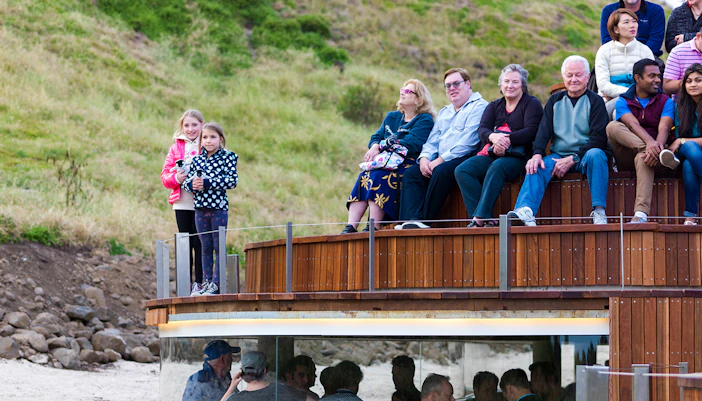
Contemporary landscape architecture designed to disappear into the dunes. At the Penguin Parade, the low profile keeps your eye on the beach and wind-beaten grasslands rather than on a dominant building.
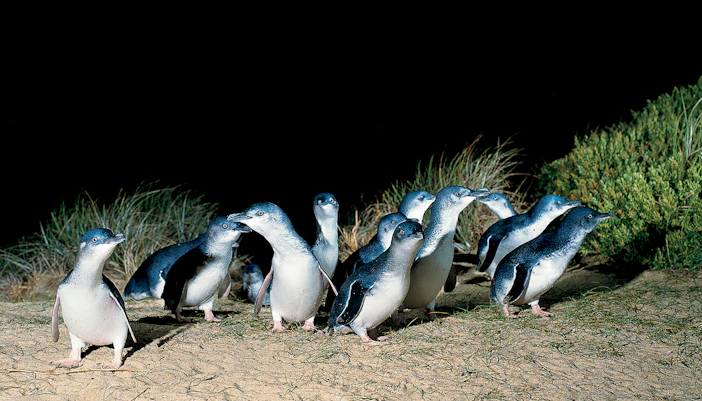
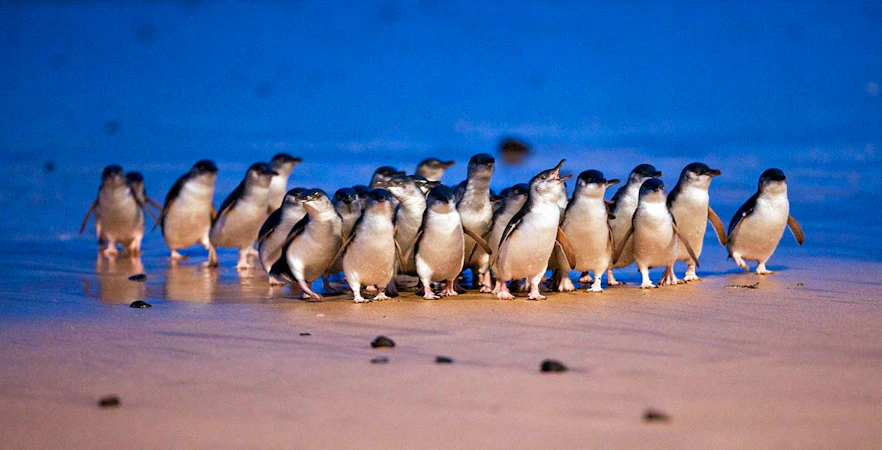
Phillip Island is home to the largest colony of Little Penguins in the world.
The island's Nobbies Centre features an interactive display simulating Antarctic conditions.
Churchill Island is Victoria’s first European agricultural site, established in 1801.
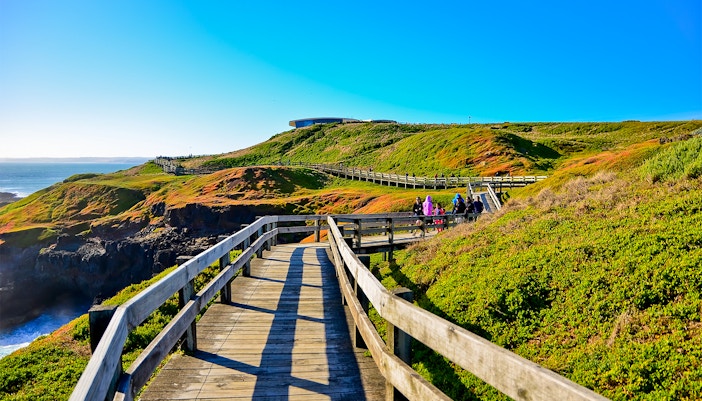
By late afternoon, the island starts to feel like it is waiting for something. Wind moves across the grasslands, geese call from the paddocks, and the boardwalks lead you toward a beach that stays quiet until the first little penguins break the surf.
What makes this place special is that it was built around protection, not spectacle. The Phillip Island Nature Parks were shaped to let you watch wildlife on its terms, from restored penguin habitat to treetop koala walkways and a working heritage farm.
The payoff is the sense that your visit connects separate parts of the island into one story: coast, burrow, bush, and farm. You leave not with a single sighting, but with a sharper feel for how this landscape works.
Skip it if: you dislike cold, windy evenings, or you only want a quick attraction without waiting for wildlife to appear on nature’s schedule.

Start here for the island’s human story: coastal trails, heritage buildings, and farm demos with working dogs, sheep, and Clydesdales. It is easiest to enjoy if you arrive early enough to catch a scheduled demonstration.
Elevated boardwalks bring you to eye level with koalas sleeping in eucalyptus trees. It is compact, calm, and easy to fit into the middle of the day; most visitors can cover it well in 45–60 minutes.
A dramatic walk over basalt headlands with constant wind, sweeping ocean views, and distant looks toward Seal Rocks. This is the best late-afternoon stop before the parade because it puts you close to Summerlands.
The indoor multimedia exhibit at the Nobbies adds a weatherproof stop if conditions turn rough outside. It is especially useful on wet days or for families who want a shorter, more structured add-on before dinner.
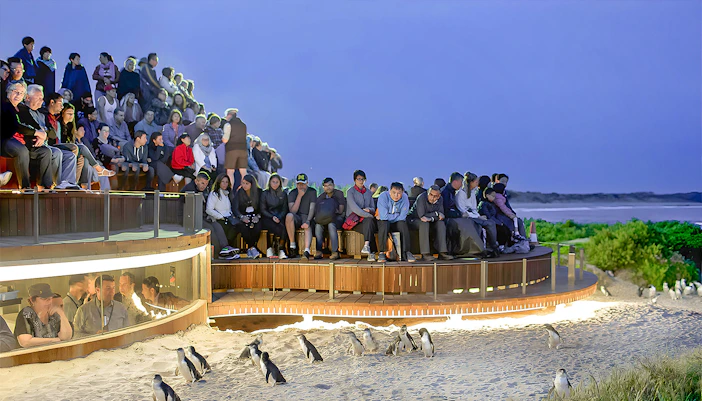
The big emotional set piece of the day. Arrive at least 1 hour early; penguins come ashore after sunset, not at it, and evening seating fills with visitors who want time to settle in.
Do not rush out once the first penguins cross the beach. The return walk is where many visitors get their closest views, as penguins waddle through the dunes toward burrows just below the boardwalk.
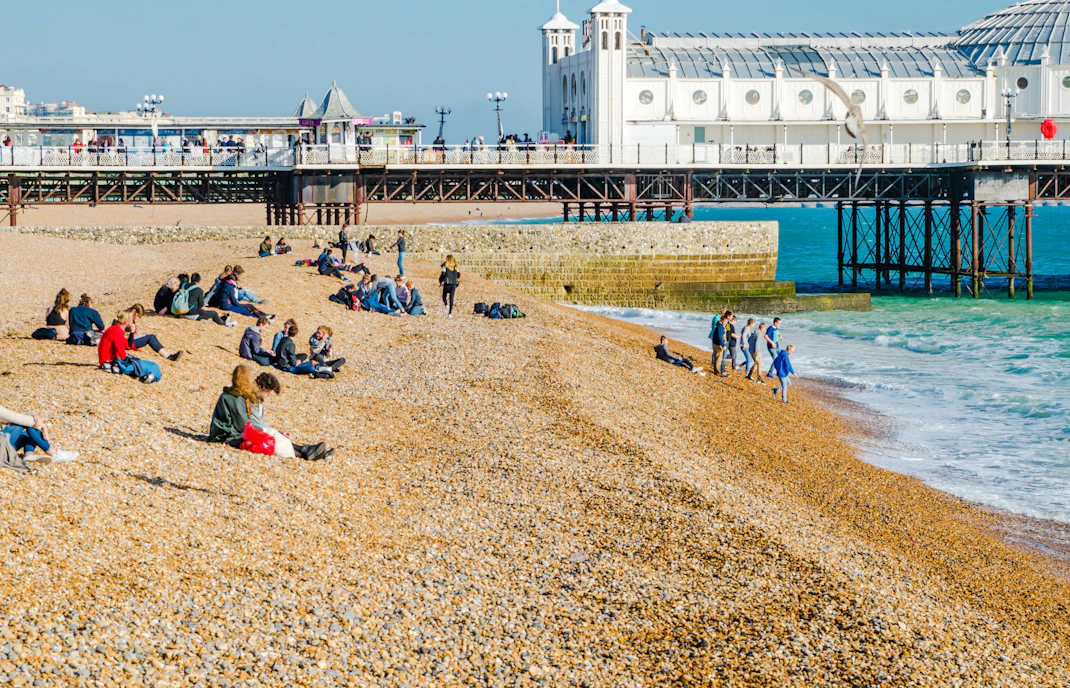
The Full-Day Guided Tour of Phillip Island Wildlife with Penguin Parade & Brighton Beach Boxes handles transfers, sequencing, and commentary, so the route flows.
Budget 4–5 hours if you are doing only the Penguin Parade precinct, visitor centre, and boardwalks, or a full 8–10 hours if you want the island’s main parks in one sweep. The difference comes from Churchill Island’s demo schedule, time at the Koala Conservation Reserve, and how early you arrive before penguins emerge 25–35 minutes after sunset.
Start at Churchill Island in late morning, then move to the Koala Conservation Reserve, and save the Nobbies for late afternoon when the coast looks its best and you are already close to Summerlands for the evening parade. Eat early, use the restrooms at the visitor centre, and walk out to your viewing tier before sunset rather than after.
Must-see: the Penguin Parade, the post-parade boardwalk, and the Koala Reserve boardwalks.
Optional: Churchill Island’s farm demos add 60–90 minutes, while Antarctic Journey adds a weatherproof 30–45 minutes.
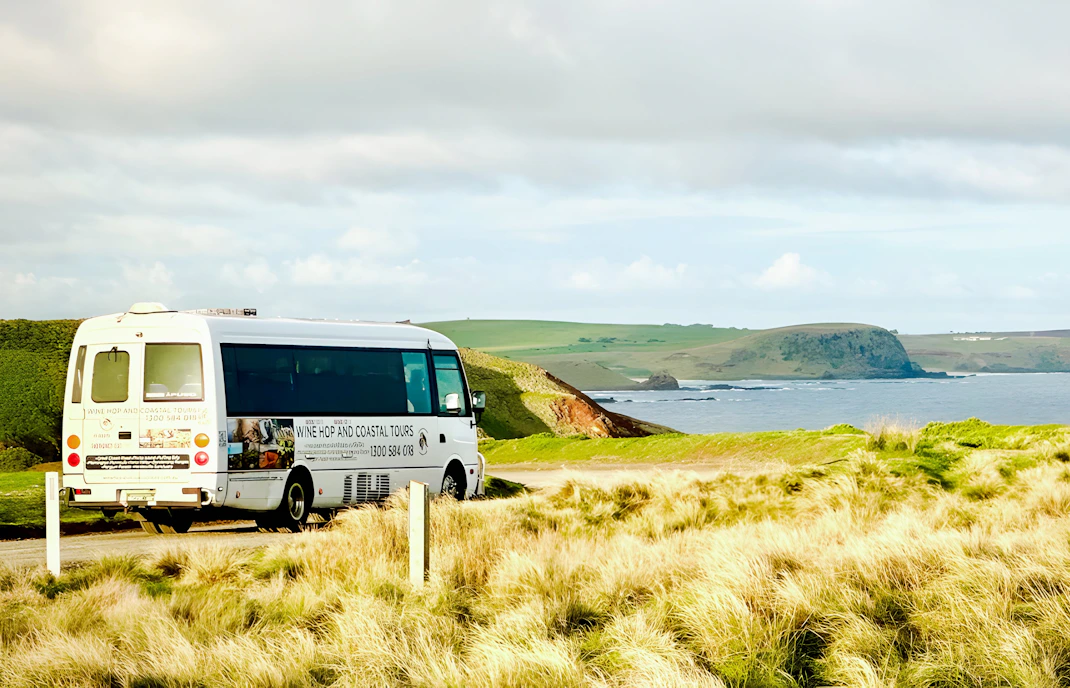
Guided vs self-paced: self-driving works well, but a guided tour is genuinely useful if you are coming from Melbourne and do not want to manage dark-road driving, seasonal parade timings, or stop sequencing.
Phillip Island Nature Parks was created by the Victorian Government in 1996 as a self-funded, not-for-profit statutory authority. That structure matters: the goal was not to build a theme-park wildlife stop, but to use tourism income to buy back habitat, restore coastlines, and fund long-term conservation on the island. At the flagship Penguin Parade precinct, Melbourne practice Terroir designed the 2019 visitor centre with the site, not against it. Their brief was unusually specific: absorb large crowds, reduce impact on penguin habitat, and make the building feel secondary to the beach beyond.
Contemporary landscape architecture designed to disappear into the dunes. At the Penguin Parade, the low profile keeps your eye on the beach and wind-beaten grasslands rather than on a dominant building.
Concrete, glass, timber, and weather-resistant finishes are used to handle salt air and heavy winds. Inside, large windows keep the coast in view, so even the visitor centre feels tied to the landscape outside.
Elevated boardwalks protect fragile burrows and dune vegetation while moving large evening crowds safely across the site. The system lets you get close to wildlife without trampling the habitat you came to see.
The strongest design choice is restraint. Paths stay low, sightlines stay open, and the walk to the viewing areas feels like entering a nesting ground, not an entertainment venue.
The 2019 Penguin Parade Visitor Centre was designed by Terroir, whose approach favors buildings that respond to place. Across the wider parks, architecture serves the conservation mission first.
Unlike a conventional attraction, Phillip Island Nature Parks runs on a loop that visitors can feel directly: tickets fund the place you are standing in. Revenue supports habitat restoration, penguin research, wildlife rescue, and the long rehabilitation of the Summerlands peninsula, where houses once stood on nesting ground. That changes the tone of the visit. You are not just entering a wildlife show; you are helping maintain fenced reserves, boardwalks, ranger programs, and the quiet conditions that let little penguins return to shore every night.
Yes — especially if you want a wildlife experience that feels distinctly Victorian rather than zoo-like. Book your tickets in advance, and arrive early enough to stay for the post-parade boardwalk, which many visitors rate highest.
Expect 4–5 hours for the parade precinct alone, or most of a day if you add Churchill Island and the Koala Conservation Reserve. Summer visits run later because penguins arrive after sunset, often well into the evening.
Do not leave after the first beach crossing. Stay for the boardwalk back to the visitor centre, where penguins shuffle past their burrows at close range. If you have daytime hours, add the Koala Conservation Reserve’s elevated walkways.
Yes — it works especially well for first-timers and school-age children. For younger kids, winter is easier than summer because the parade ends earlier. If your family dislikes cold wind or late nights, choose sheltered viewing or visit off-peak.
Yes for weekends, school holidays, and any premium tier. General admission can still sell strongly near peak dates. If you want the wider island circuit, Phillip Island 3 Parks Pass: Penguin Parade, Koala Conservation Reserve & Churchill Island is the most practical prebook.
The easiest option is a bundled coach trip. The Half/Full-Day Phillip Island Day Trip with Penguin Parade suits travelers who want transfers handled, while the Phillip Island 3 Parks Pass is a more comprehensive experience that includes the Penguin Parade, Koala Conservation Reserve, and Churchill Island.
Phillip Island Nature Parks Penguin Parade Tickets
Phillip Island 3 Parks Pass: Penguin Parade, Koala Conservation Reserve & Churchill Island
#From Melbourne: Half/Full-Day Phillip Island Day Trip with Penguin Parade
Combo (Save 6%): Cape Woolamai Morning Cruise + Phillip Island Nature Parks Penguin Parade Tickets
From Melbourne: Puffing Billy Train Ride & Phillip Island Guided Tour